
Why Sporestrike is Jet Black: The Purpose Behind Activated Charcoal
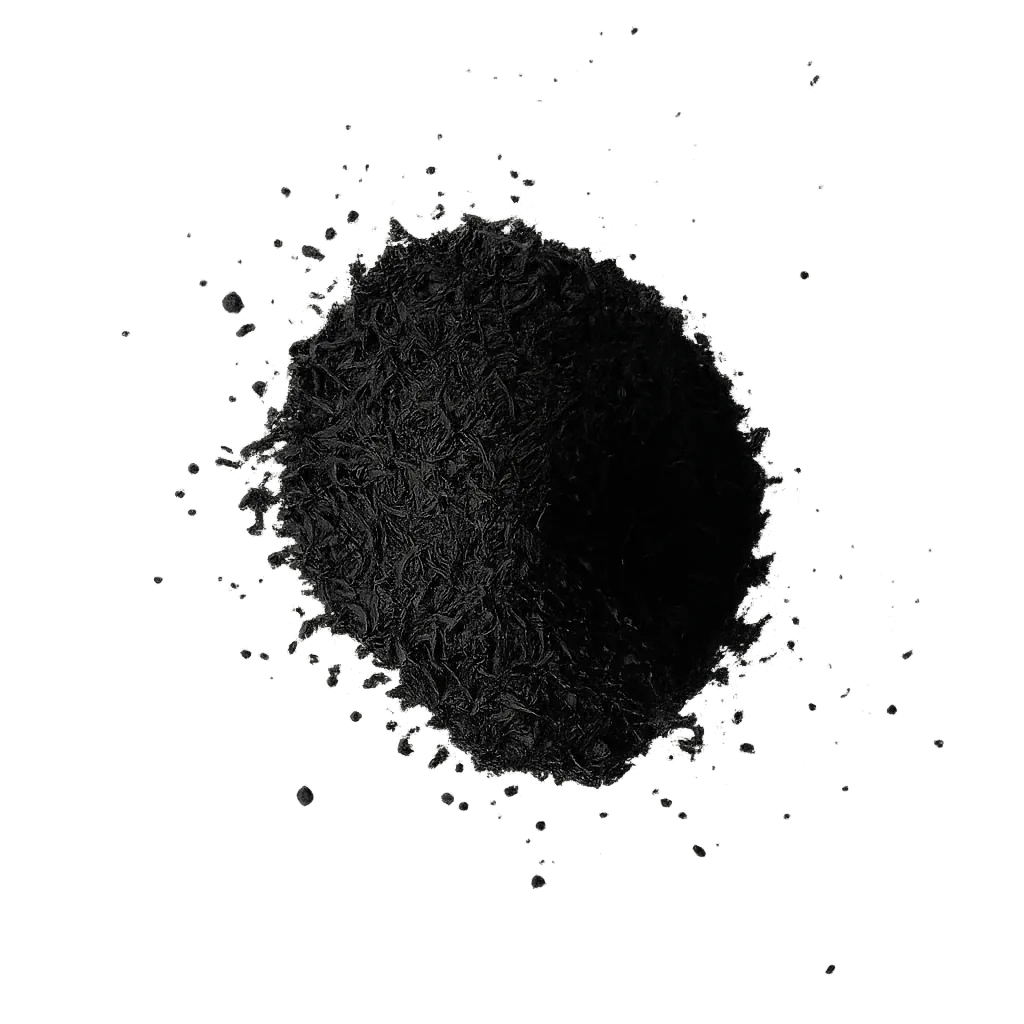
At Sporestrike, every detail of the formulation is intentional. One of the first things you’ll notice is its black colour. That isn’t a branding choice. It’s a byproduct of the substrate the enzyme complex is carried on.
A Functional Substrate
The enzyme complex at the core of Sporestrike is isolated from a fungal system studied for its activity against other fungi, documented in agricultural and environmental research. It works enzymatically: chitinases and cellulases that break down the cell walls of competing fungi, including the dermatophytes associated with conditions like athlete’s foot and fungal nail involvement.
For that enzymatic activity to be usable in a topical product, it needs a stable carrier. That’s where activated charcoal comes in.
Why Activated Charcoal?
Activated charcoal is a porous, carbon-rich material known for its capacity to adsorb (not absorb) a wide range of substances, which is why it has long been used in filtration and detoxification products. In Sporestrike’s formulation, that same porosity does three specific jobs:
- pH and moisture regulation: charcoal helps hold a stable microenvironment at the application site, which the enzyme complex needs to remain active.
- A nutrient-release scaffold: the porous structure carries and slowly releases the compounds that support enzymatic activity, while also trapping unwanted byproducts.
- Close surface contact: charcoal’s structure keeps the enzyme complex in sustained contact with keratinized tissue rather than sitting on top of it.
More Than Just a Colour
Where most nail and skin products lead with white creams or clear gels, ours doesn’t, because the substrate that makes the formula work happens to be black. Rather than masking it with dyes or fragrance, we left it as it is.
That’s the difference between a cosmetic designed to look clean and one engineered to function. The charcoal isn’t decoration. It’s the scaffold the rest of the formulation is built on.