
The Science
What this page is. Background on the mycology our formulation is cultivated from, and on why nails are a difficult surface to reach. It describes published research, not our product's performance. Sporestrike is a cosmetic care serum. Nothing here is a claim about what it will do for you, and none of the research below was conducted on Sporestrike.
Most antifungal chemistry works by interfering with how a fungus builds its cell membrane. There is a second, older mechanism: fungi that break down the cell walls of other fungi enzymatically. That behaviour is documented in the published literature, and it is the lineage our enzyme complex is cultivated from.
1. Why conventional topicals struggle
The dermatophyte responsible for the large majority of toenail fungus, and for athlete's foot, is Trichophyton rubrum. Its hyphae do not sit on top of the nail. They grow interwoven into the nail plate itself.
That single anatomical fact explains most of the category's disappointing results. A cream, lacquer, or solution applied to the surface has to travel through dense, non-vascular keratin to reach the growing tips of the organism. Much of the dose never gets there. (Why that makes delivery hardware matter as much as formulation: the oxygen-sealed applicator.)
This is also why the regulatory picture looks the way it does. Under FDA OTC monograph M005, a topical antifungal drug labelled for use on nails is considered misbranded unless it has gone through a New Drug Application. That is why a tolnaftate product such as Fungi-Nail® carries fine print stating it is not effective on the nails, and why a urea-based keratin softener such as Kerasal® Nail Renewal, which contains no antifungal active at all, positions itself around appearance rather than around the fungus.
It is also why the allylamine and benzylamine products on the same shelf, Lamisil® AT and Lotrimin® Ultra among them, are indicated for athlete's foot on skin and not for nails. None of this is a failure of those products. They do what their labels say. The labels are simply narrower than the problem most people are trying to solve.
| Category | Active | What it does | Price |
|---|---|---|---|
| Keratin softenerse.g. Kerasal® Nail Renewal | Urea + lactic acid | Soften and clarify the surface of the nail plate. Cosmetic products, containing no antifungal active. | ~$25–35 |
| OTC thiocarbamatese.g. Fungi-Nail® | Tolnaftate 1% | Monograph antifungal. Labelling states it is not effective on the nails or scalp. | ~$15–20 |
| OTC allylaminese.g. Lamisil® AT | Terbinafine 1% | Indicated for athlete's foot, jock itch and ringworm on skin. Not indicated for nails. | ~$10–15 |
| OTC benzylaminese.g. Lotrimin® Ultra | Butenafine 1% | Also skin-only. Same labelling limitation on nail use. | ~$10–15 |
| Prescription lacquerse.g. Jublia® | Efinaconazole 10% | Prescription-only, and does penetrate the nail. Applied daily for 48 weeks. | $400–600 |
| Oral antifungalse.g. generic terbinafine | Terbinafine (systemic) | Prescription-only. Requires liver function monitoring, and interacts with a number of common medications. | $50–200 |
Brands are named only as examples of each category. Descriptions reflect each product's own published labelling and the FDA OTC antifungal monograph; prices are approximate US retail. All trademarks are the property of their respective owners. Sporestrike Labs is not affiliated with, endorsed by, or sponsored by any company named above, and no comparison of effectiveness against Sporestrike is stated or implied.
2. What mycoparasitism is
Some fungi make their living attacking other fungi. They are called mycoparasites, and agriculture has used them as biocontrol agents for decades, deployed against crop pathogens precisely because they are effective at killing fungi.
Their mechanism is enzymatic rather than chemical (the broader idea is laid out in The Idea Behind Myco-Therapeutic Development). Mycoparasitic fungi secrete:
- Chitinases, which digest chitin, the structural polymer in fungal cell walls
- Beta-glucosidases, which break down glucans, the other major cell wall component
- Cellulases and a range of secondary metabolites that arrest competitor growth
The distinction matters. Terbinafine, tolnaftate, and butenafine, the actives in essentially every drugstore antifungal, work by disrupting ergosterol synthesis, interfering with the fungus's ability to build its membrane. Mycoparasitic enzymes do something categorically different: they digest the cell wall directly.
3. The published research
Brodsky, M., Maoz, M., et al. (2004). Trichoderma spp. Antagonism to the Dermatophyte Trichophyton rubrum: Implications in Treatment of Onychomycosis. Mycopathologia 158(2): 191–195.
This paper tested Trichoderma species directly against Trichophyton rubrum, the organism behind onychomycosis. It found clear antagonism, identified Trichoderma virens NRRL 26672 as the most effective strain tested, and attributed the effect to mycoparasitism: enzymatic lysis of the T. rubrum cell wall, supported by antibiotic secondary metabolites.
The authors' own framing is in the title: implications in treatment of onychomycosis. The mechanism was identified as relevant to exactly this problem.
A note on what this is and what it is not. This is in vitro research establishing a mechanism. It is not a clinical trial of Sporestrike, and we will not present it as one. What it does establish is that the biological principle our formulation is built on is real, published, and independently studied, which is more than can be said for most of what shares a shelf with us.
4. How this becomes a product
Translating a laboratory result into something usable on a human nail is mostly a delivery problem. Three decisions do that work:
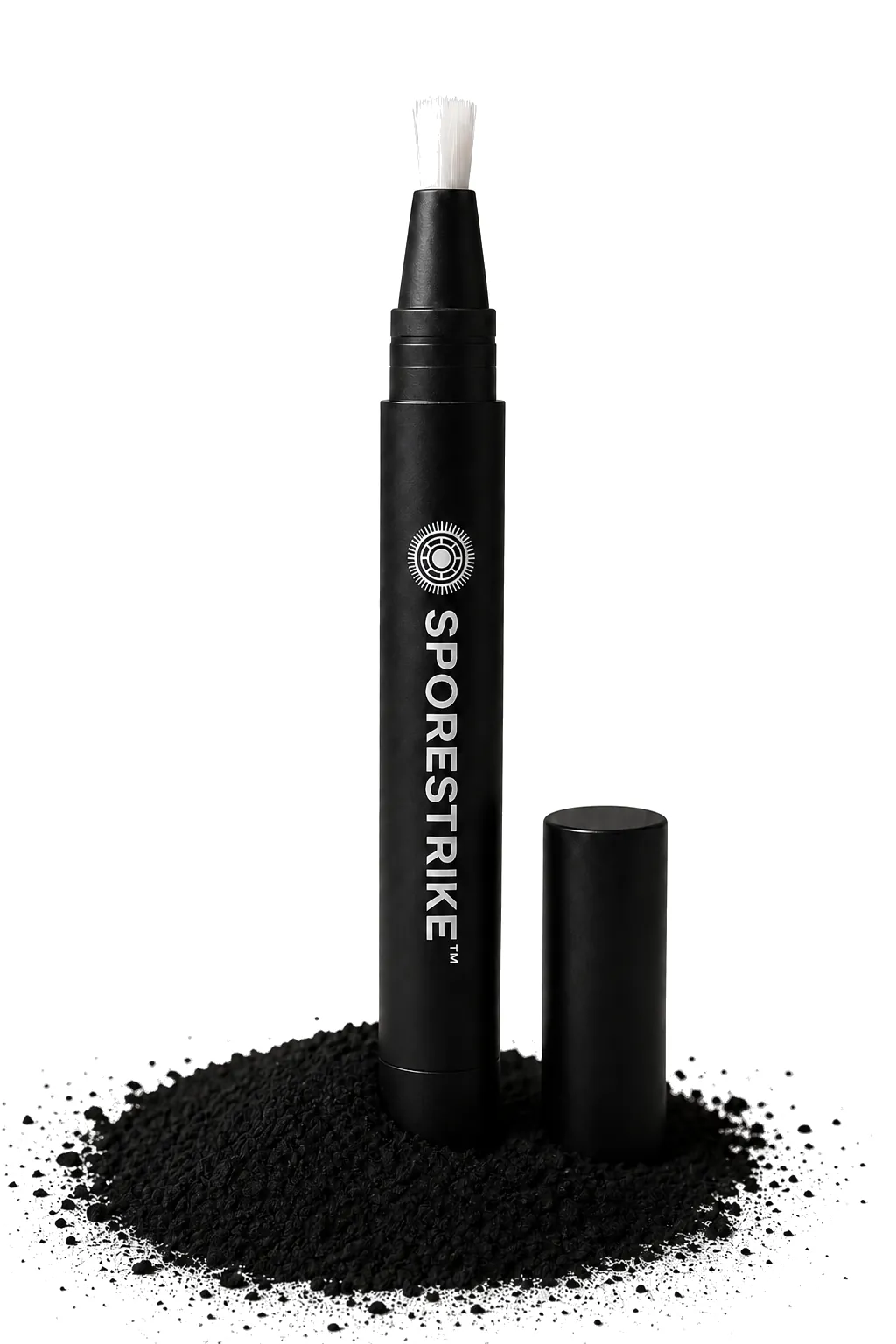
- The Mycological Enzyme Complex. A purified fungal enzyme system, carried in cold-pressed grape seed, meadowfoam, black castor, tea tree and shea oils, with no synthetic fragrance, dyes, parabens or harsh preservatives.
- An activated carbon substrate. Coconut-shell activated charcoal, present as a functional ingredient rather than a colourant. A porous scaffold that modulates pH and moisture at the site, carries and slowly releases nutrients that support enzymatic activity, and maintains close contact with keratinized tissue. Full explanation →
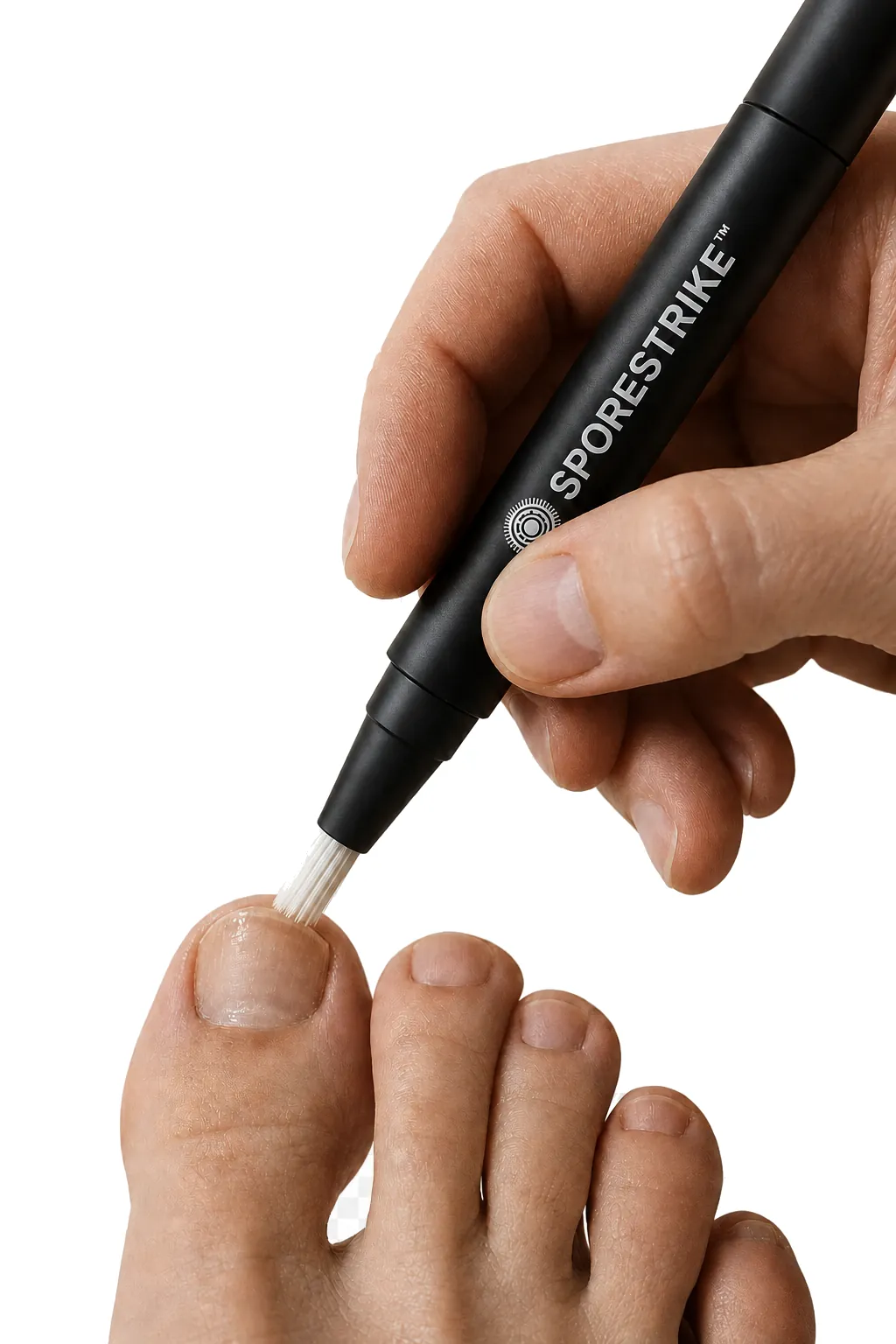
- An oxygen-sealed applicator. Enzymes oxidise. The airless pen protects potency between uses and delivers a precise dose to the nail bed without waste or contamination. Full explanation →
5. What this means for you
If you have worked through two or three products over several years without the result you wanted, you were not using them wrong. Most of them are either surface cosmetics, or drugs that legally cannot claim to work on nails because they struggle to get there.
Sporestrike takes a different route. It is a cosmetic care serum, not a drug and not a promise, built on a biological mechanism with published research behind it, applied daily with an applicator designed to keep it intact. Nails grow slowly, so this is a matter of months of consistency, not days.
Questions
- Is Sporestrike a drug?
- No. Sporestrike is a cosmetic product. It is not intended to diagnose, treat, cure, or prevent any disease.
- What is mycoparasitism?
- It is the behaviour of fungi that parasitise other fungi. Mycoparasitic species secrete enzymes, chitinases and beta-glucosidases among them, that break down the cell walls of competing fungi. It is a well-documented mechanism in agricultural biocontrol.
- Why do topical antifungals so often disappoint on nails?
- Because the dermatophyte grows interwoven into the nail plate. A topical drug applied to the surface has difficulty reaching the growing tips of the fungus underneath. This is a documented limitation, not a marketing claim.
- Does the published research test Sporestrike itself?
- No. The 2004 Mycopathologia paper studied Trichoderma species against Trichophyton rubrum in vitro. It establishes the mechanism our formulation is derived from. It is not a clinical trial of our product, and we do not present it as one.
- What does the activated charcoal do?
- It is coconut-shell activated carbon (listed as Charcoal Powder), and it is a functional substrate rather than a colourant: a porous scaffold that modulates pH and moisture at the application site, carries and slowly releases nutrients, and holds the bioactives in close contact with keratinized tissue. Together with organic black castor seed oil it is also why the serum is jet black.
References
- Brodsky M., Maoz M., et al. (2004). Trichoderma spp. Antagonism to the Dermatophyte Trichophyton rubrum. Mycopathologia 158(2):191–195. PubMed
- Sood S. et al. (2020). Trichoderma: a beneficial antifungal agent and insights into its mechanism of biocontrol. Egyptian Journal of Biological Pest Control. Springer
- FDA OTC Monograph M005, Topical Antifungal Drug Products for Over-the-Counter Human Use.
- InformedHealth.org / NCBI. Nail fungus: polish, cream or tablets? NCBI Bookshelf
Brands are named only as examples of their category, and descriptions reflect each product's own published labelling. All trademarks are the property of their respective owners. Sporestrike Labs is not affiliated with, endorsed by, or sponsored by any company named on this page, and no comparison of effectiveness against Sporestrike is stated or implied.
Sporestrike is a cosmetic product. It is not intended to diagnose, treat, cure, or prevent any disease.
The serum this lineage informs
Sporestrike Fungal Care Serum is a cosmetic nail and skin care product. $19.95 · 4 mL · 60 day supply · Free shipping on every US order, every size
See the product →